I spent over one week making this drawer-like square frame with a baseplate. The reason why the process is so slow is that I practised paring wood with a chisel. This technique I learned from two woodworking influencers on Xiaohongshu.com, who promised that chisel paring is a fundamental and crucial skill for a joiner focusing on furniture making.
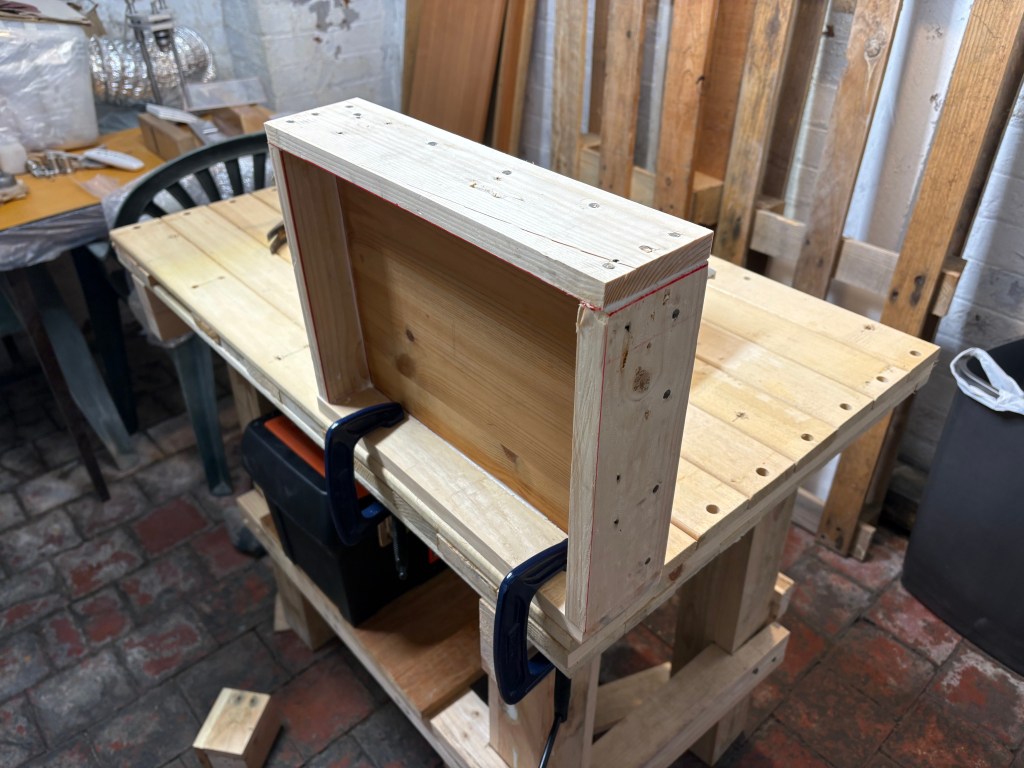
I tried to shave wood flat with my plastic handle chisel, and learned how to release and relax the hand holding the handle, and how to press and guide the chisel blade with the thumb of my other hand. Anyway, I elaborate because I hope readers will understand, compared with a typical wood plane, how hard and slow a chisel is to plane (maybe I should portray the trick in the future?).
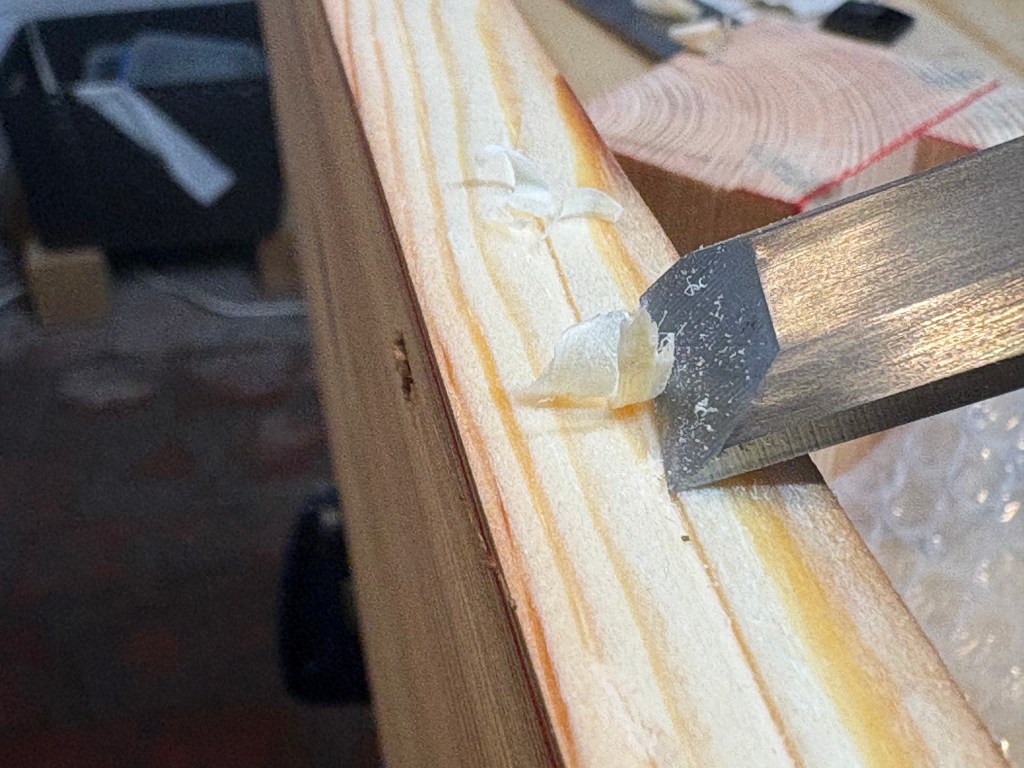
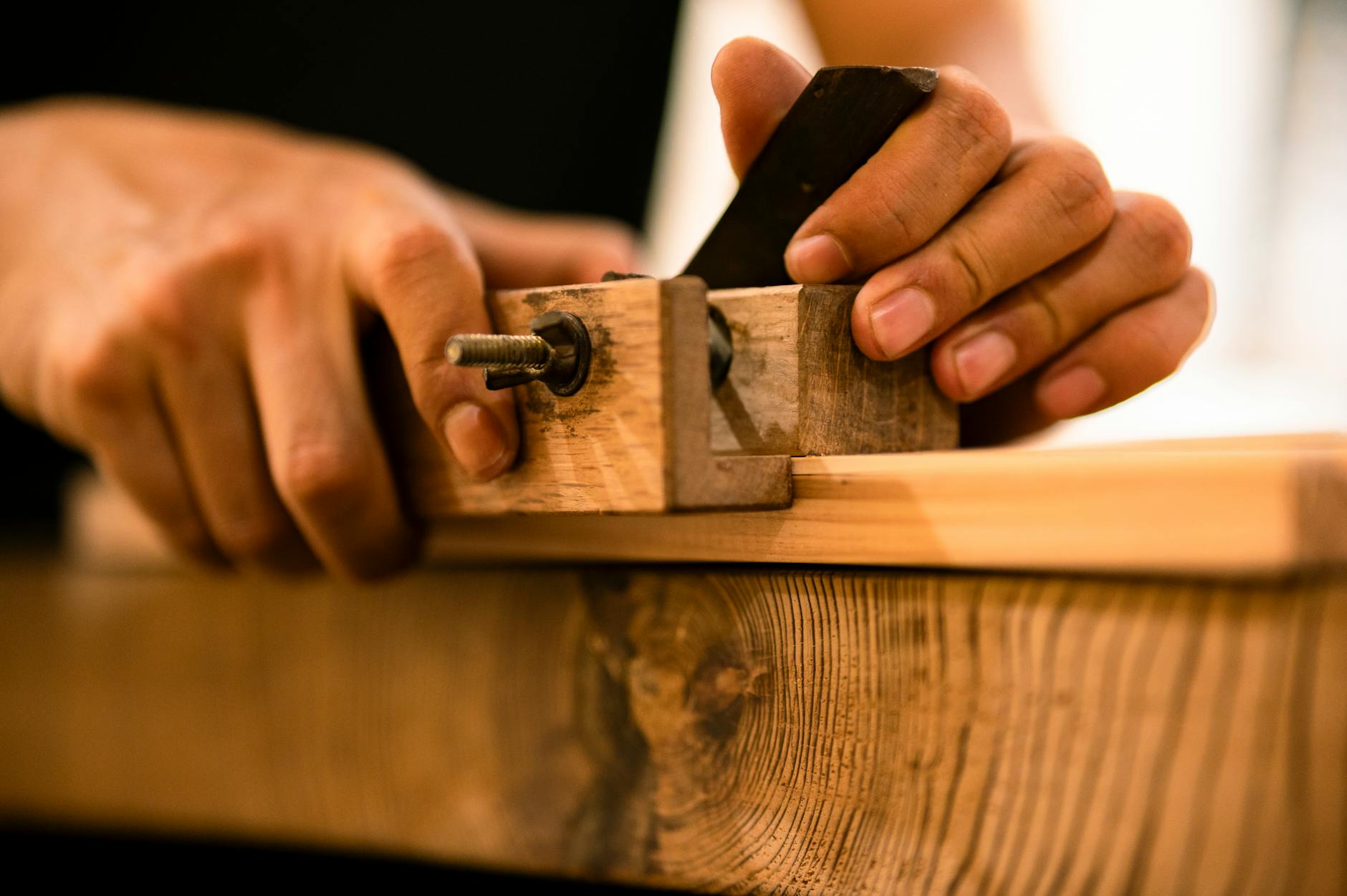
Originally, I wanted to trim the edges of the woods with chisels, but after a week, I lost my patience and recognised the limitations of my skill – I eventually used a canna to plane them.
Whatever the tools I used, let’s go back to the square frame with a basplate. The “wood frame” would be a bench-edge work support fixed by two C vices. In this way, I can whet my chisel, flatten whetstones, or shave wood on the work support.
Maybe one more thing deserves to be elucidated. That is, by bringing the stretcher flush with the benchtop edge, a reliable vertical clamping platform is integrated into the bench structure. This is a cheaper alternative to the woodbench vice (it costs at least £70 in the UK), because merely two C-clamps are needed to hold a piece of wood.
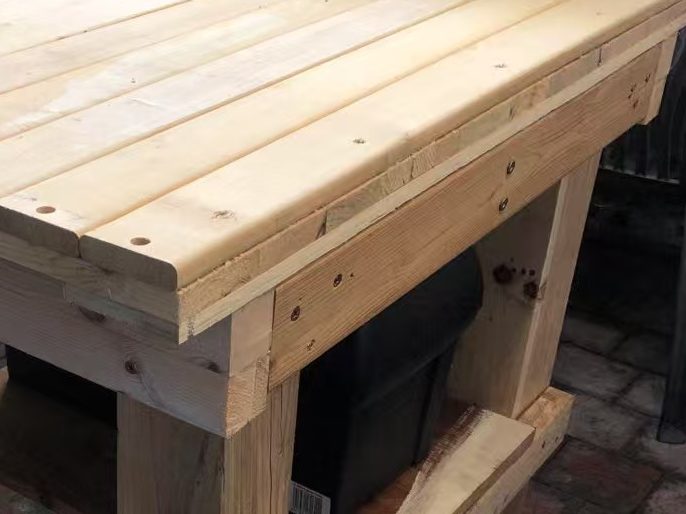
I introduce the bench structure because this is the first time I have used it. Also, it is the first time I have used a 4oz hammer to nail the boards together after becoming a woodwork hobbyist one year ago. I was so surprised when I realized this.
 Tangible Culture and Society Studies Network