Author: Roland Teo

  • Recycling an Abandoned Pine Timber (1)

    Where and when did I get the timber?
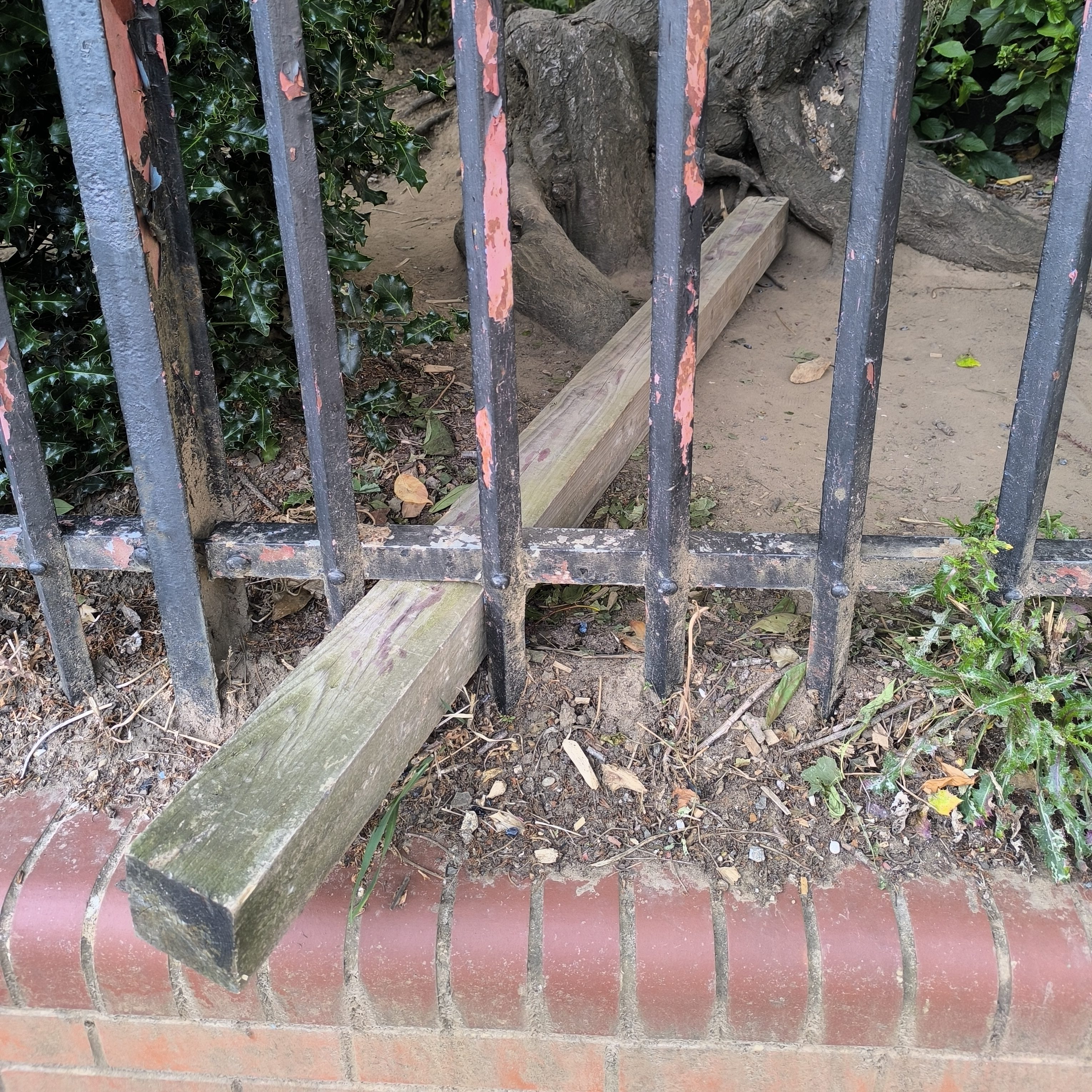
    I found the timber under a cherry tree near a road in a summer dusk. I checked its quality and observed the street for a while to confirm that the wood belonged to no one.
    What was the situation of the timber when I found it?
    The pine timber is 2 m long and the cross-sectional side’s length is 10 cm; it is heavy, but affordable for an adult. The only issue is that the wood’s face is dusty and covered by moss. Also, the skin has been compromised by weathering; therefore, I decided to return to wearing gloves and working clothes to protect my hands and body from potential stabbing or scratching.
    How could I take it to my home?
    Then, confronting the strangers’ curious view, my shoulder affords the timber with the assistance of my hands, and I bring the wood home.

    What are the ideas I originally planned to use the timber, and why did I change my mind?
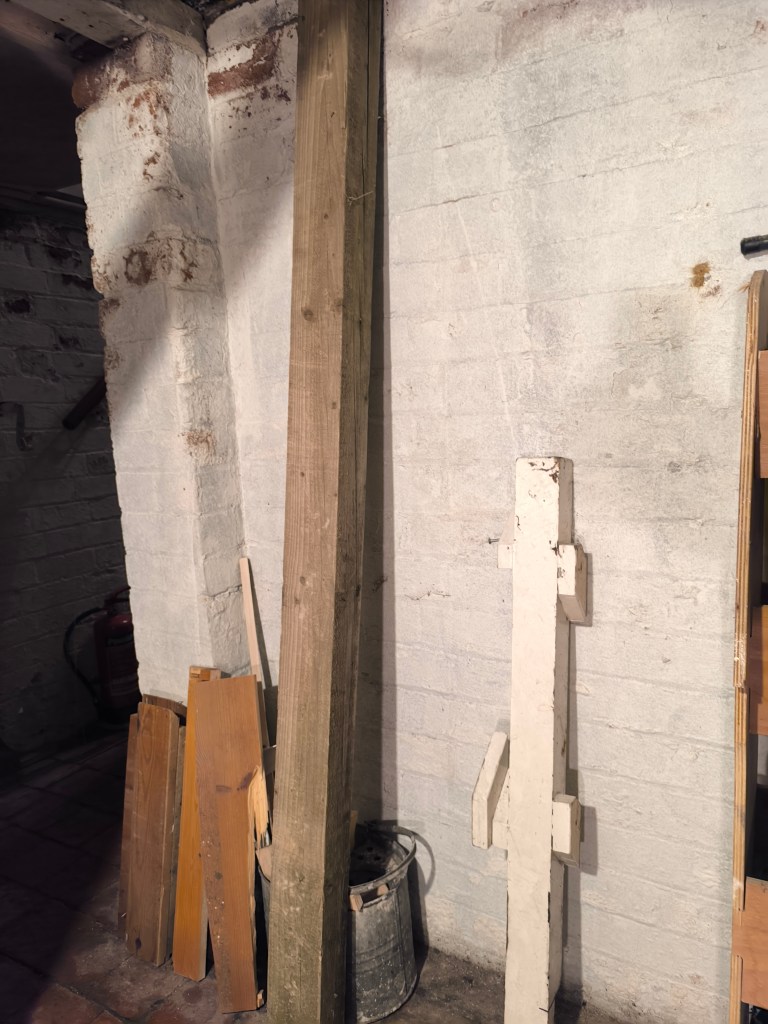
    In the following weeks, even though I locked the pine in the basement, I have no idea how to deal with it. Initially, I believed it could be cut into multiple pieces and then assembled into a natural-style tea table. However, I don’t know why I need a tea table without any storage function. Then, I thought it might be used for a wooden bench or some stools, but why should I make these when I have no space to invite guests? Especially, most of my friends are much taller than I, and my man cave has an extremely low floor height. So, they cannot stay in my man cave comfortably.
    I cannot answer the two questions; thus, I have to admit that the legs of my woodworkbench are the final destiny of the pine timber.
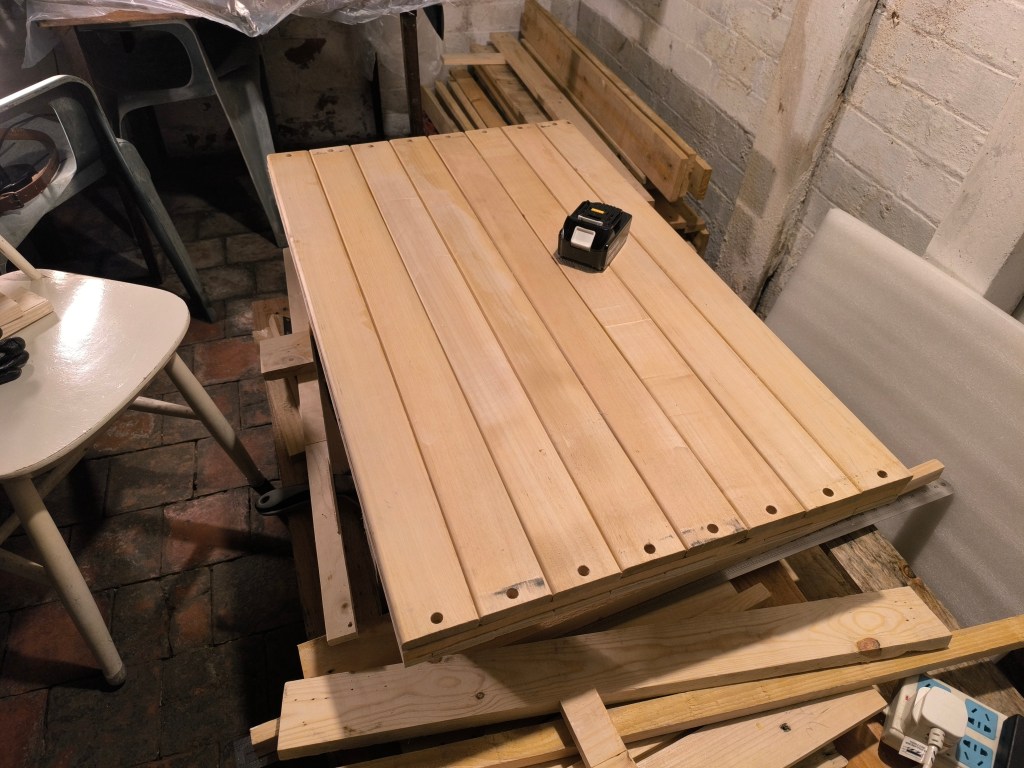
    What is the ultimate use of the timber?
    Already answered.


    What challenges did I encounter when I used the timber for the legs of my woodwork bench?
    * The surface machining, due to that the wood had been corrupted and covered by moss and fungi
    * Hard to saw into different pieces with the same length, because the cross-sectional side length of the timber is about 9 cm to 10 cm.
    * Flating six faces to Squaring the timber, according to the wood, which was warped by undergoing a long time in the outdoor environment.
    * Adding fasteners to prevent it from splitting further.
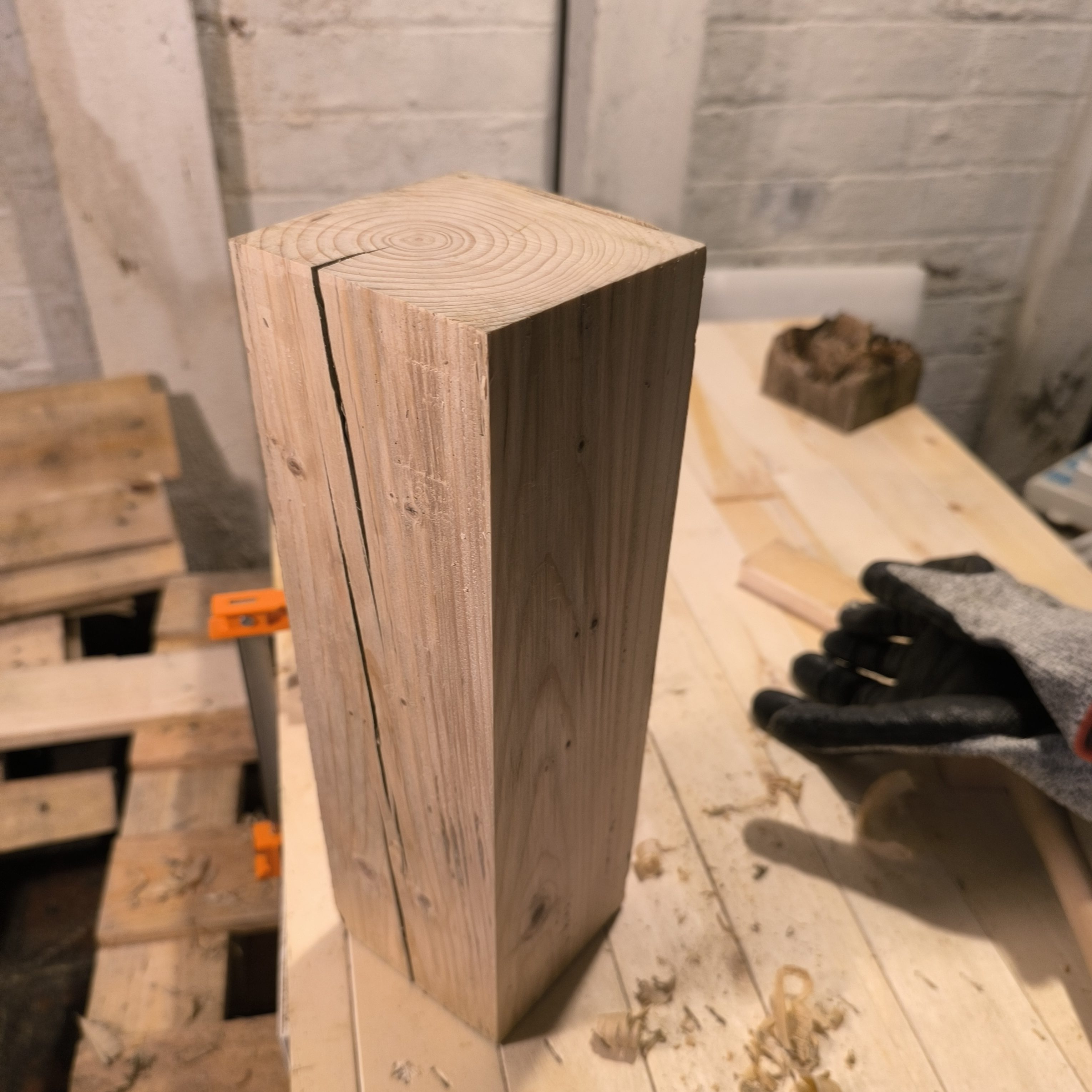

    What is the plan for the offcut?
    I have three plans for the offcut, and I should pick one. First, A lamp base; second, a wooden stool; third, a scale model diorama ground. I still have no idea until now. Maybe there is another option, that is, practising the butterfly jig on it. Due to that the two table legs’ parts have some significant gaps, I plan to use the traditional Chinese “butterfly jig” to fix them. For me, this approach requires the technique of using wooden chisels. It is a smart idea to utilize the offcut to learn how to use chisels in this way. And yes, after I repair the cracks on the offcut, preventing them from continuing to expand, I tend to use it as a lamp base.
  • A Free Plastic Pallet for Placing Wood in the Basement

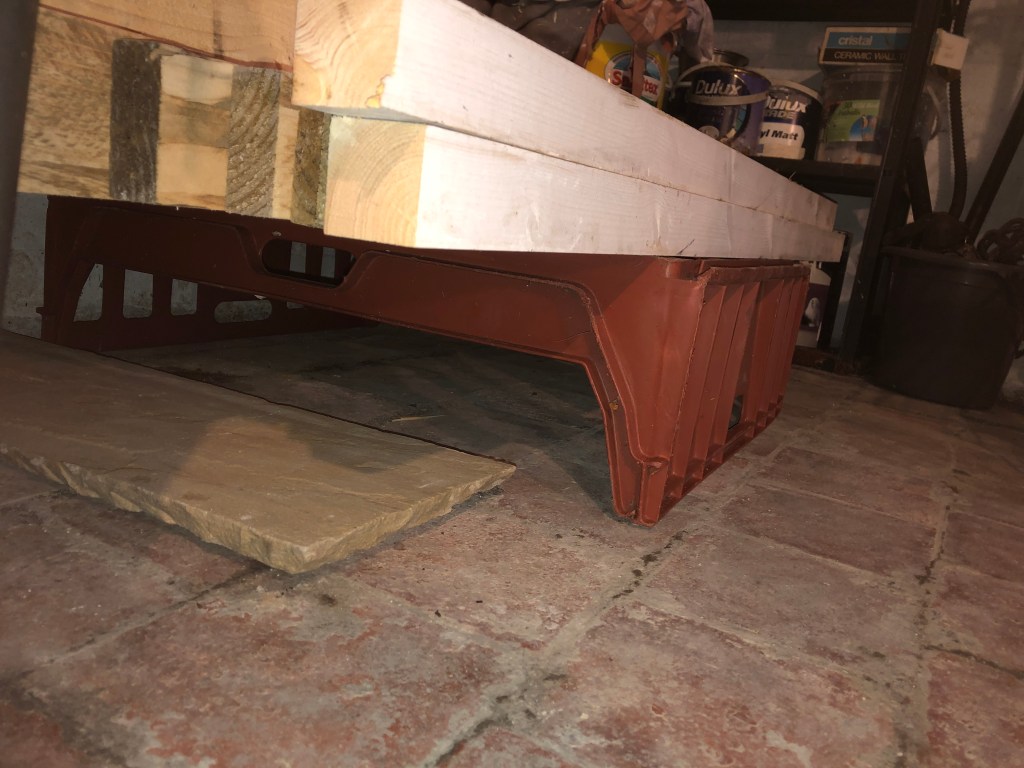
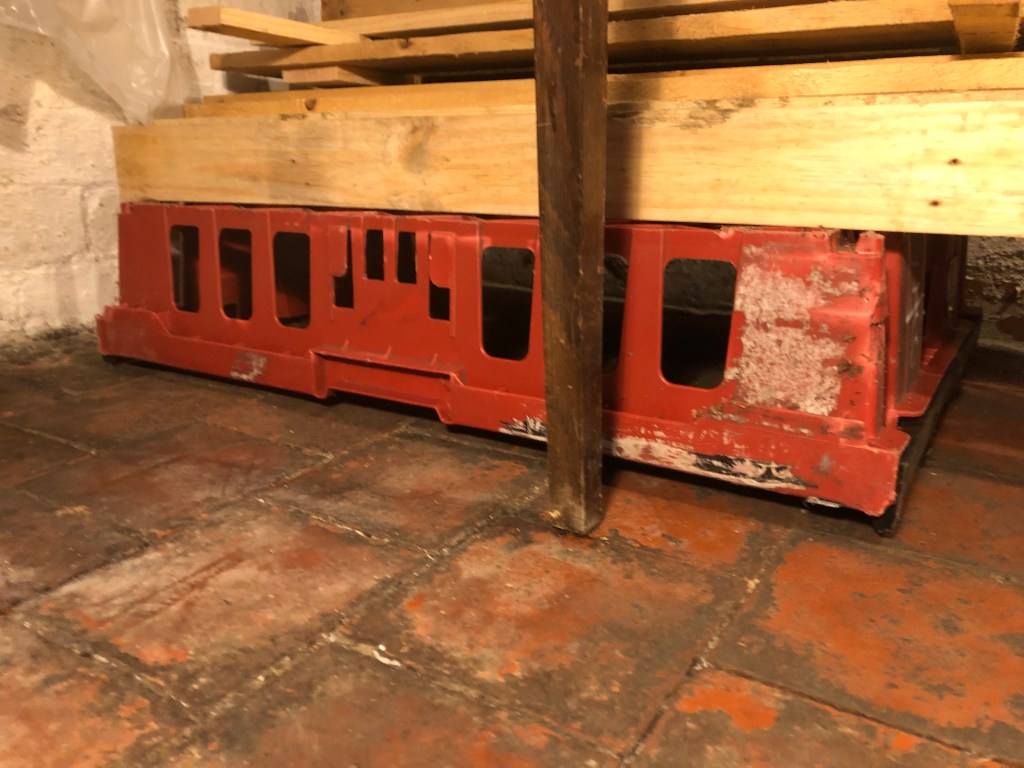
    I saw these two plastic baskets near the bin outside the post office which closed to my home, I asked for these two and the employee was quite happy. He said that they stay at the corner for a long time, and if they were useful for me are great.

    I had no idea about their use; I merely felt they might be helpful. Hence, they slept in my basement for two months, until this week I started to sort out the wood pieces. I realized that their height is pretty suitable to be a base for storing the woods, preventing moisture and mould to corrode the pines. Besides, I could spreadly stoke wet and dry woods on different base.

    I mean, yeah, originally, I had no idea about the foundation of the baskets, until I had an idea. This sentence is nonsense, but it’s also a fact. You cannot rationally predict what is the function of a random stuff on the street, but you just can feel it will be helpful. To some extent, it is a sense based on your subconsciousness.

  • The Process of Making a Grinding Plate v0.1

    I started a new project: making a grinding plate instead of the ice cream stick I frequently used for scale model assembling.

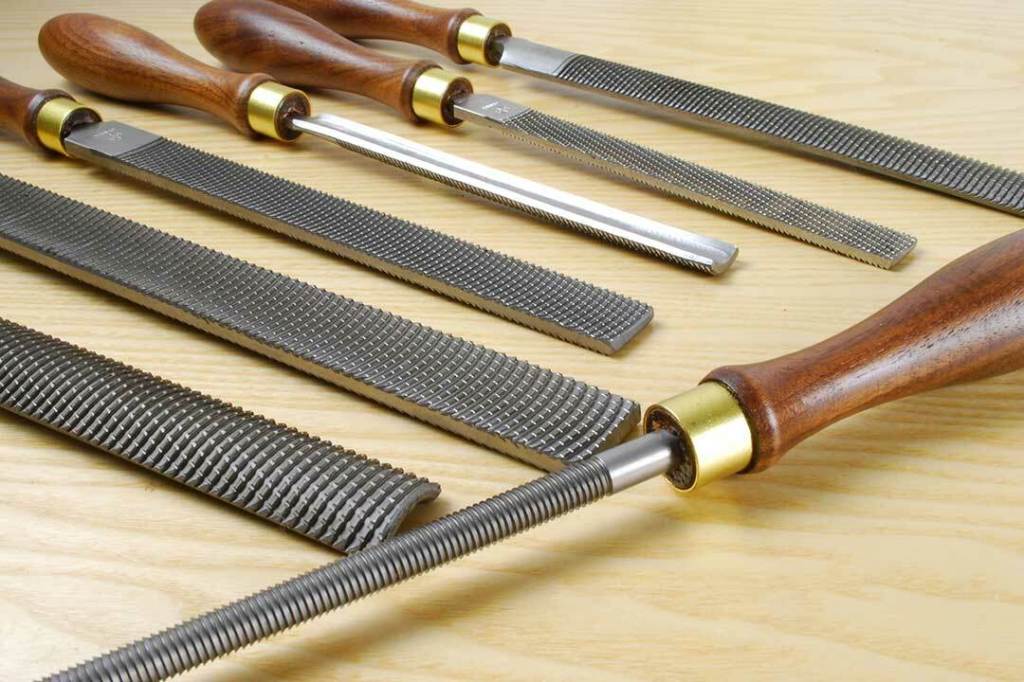
    The project doesn’t persuade you to throw out your ice cream stick or woodworking file (Actually, I haven’t seen any plastic scale model player use a metalworking file). They are quite good, providing a basic grinding function at an extremely cheap cost for hobbyists. You can find them when you finish an ice cream or open your grandfather’s toolbox. They are easy to gain from home and even no need to pay.

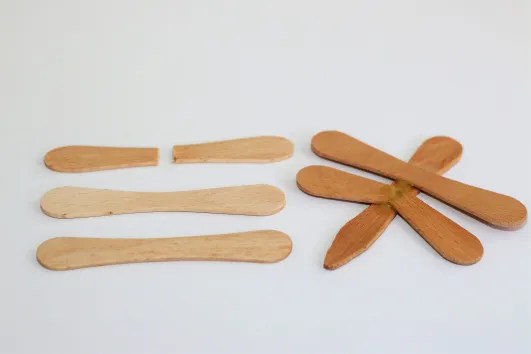
    The ice cream stick and woodworking file allow you to start sanding work from 0 to 1 with a lower budget. However, the two tools are not perfect. The stick was usually made from the birch wood (Betula Pendula), since it is odorless, soft, smooth and safe to make tableware. Yes, a strip can be a fundamental gridding board (it worked quite well, honestly), but it originally was made for one-time use, hence its strength is not … I cannot say it’s not good, but it isn’t suitable for many conditions when you polish your models.

    Sometimes you will find it cannot stay straight and flat, due to that you increase the pressure through the fingers. Sometimes the sanding surface is too broad to be covered by a wooden pieces. Besides, the stick usually has a thin thickness that is the reason why it is so easy to break. Yes, I know someone may say: “This is not the tool’s problem, it is triggered because you are clumsy! ” I agree, but nothing can stop an amateur from finding a better solution.

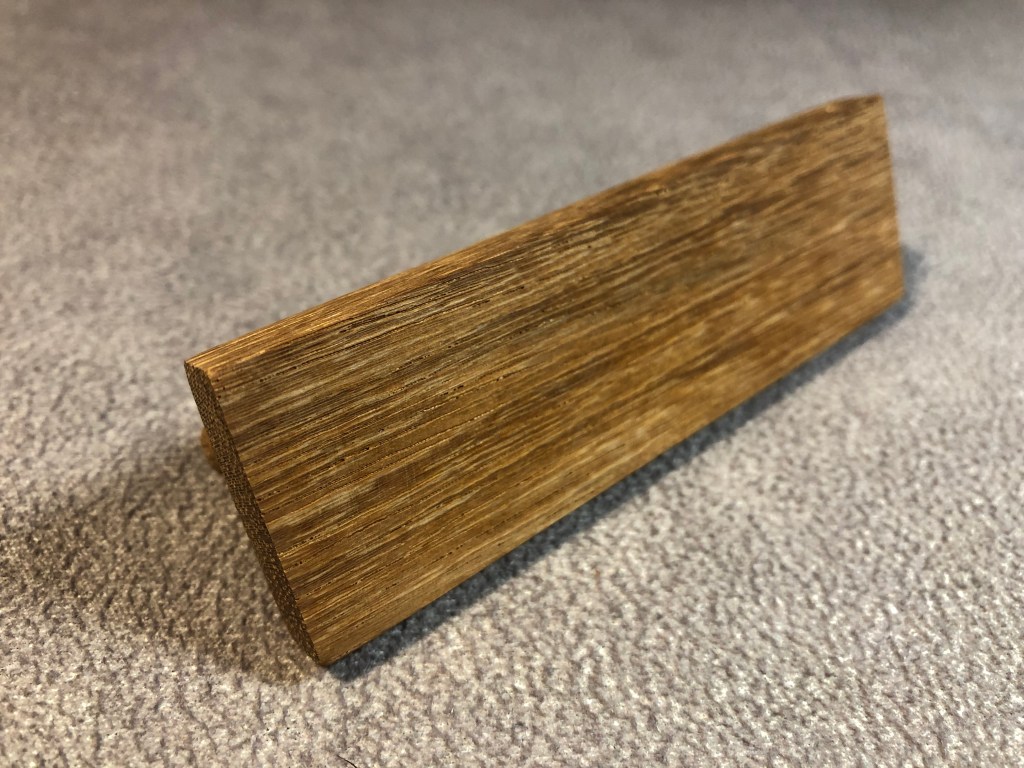
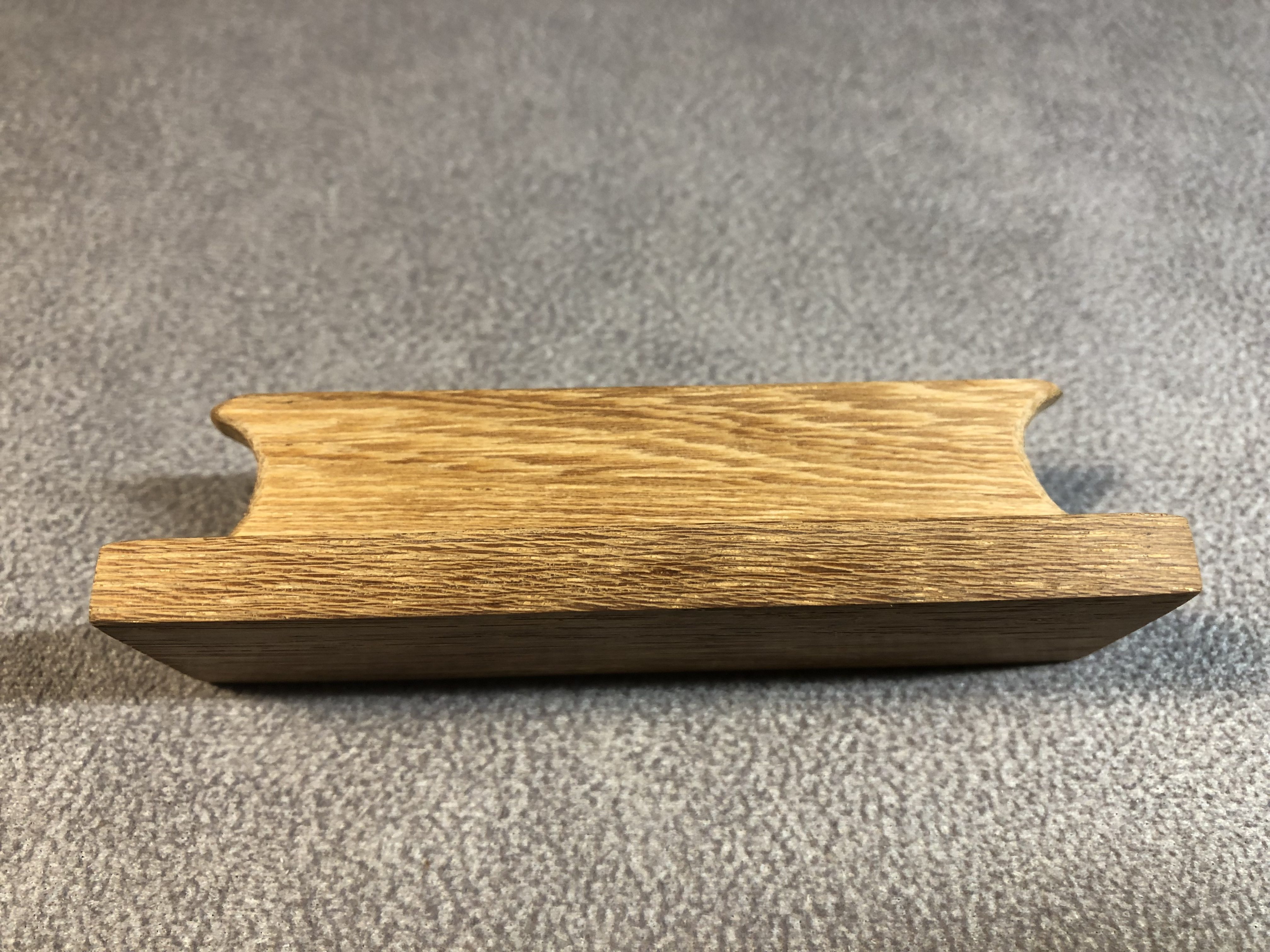
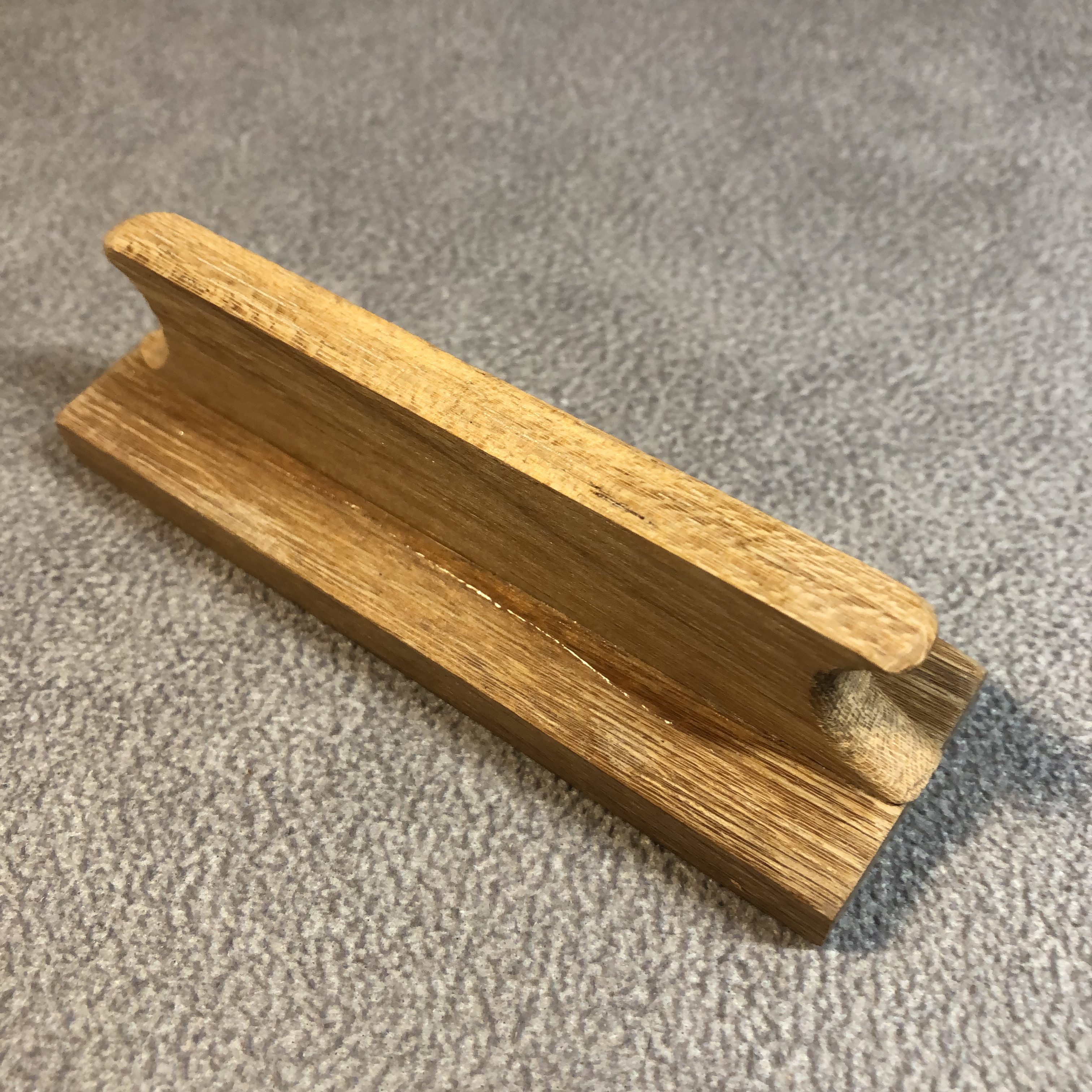
    Here is my plan. To increase the strength, I picked teakwood. Its quality is pretty stable and tough, which is why it was once used in the deck materials of battleships, especially the IJN, during World War II. To improve the reliability further, I bought pieces of teakwood hub with 8 mm thickness, 30mm width and 60 mm length. The block is almost a little brick, or a Chinese Mahjong tile, dense, solid, and reliable in the hand.

    My design is a flat plate with an inverted T-shaped cross-section, and the vertical lines of the T letter are handles, which shall be refined using experience, better for relieving the soreness of tendonitis. Initially, the handle wood component’s length and thickness were the same as the flat plate, 60mm and 8mm, but its width (or height) was shorter, only 20 mm (the plate was 30mm wide).

    The size of the handle generates an obstacle because the 60 mm length is too long to be held by my thumb and middle finger. As the modification, I sawed two semicircles on both ends of the handle (each one’s radius is about 8 mm), which reduced the length of the handle, enhancing the comfort of holding the handle with fingertips. Also, using a milling cutter of the electric grinding pen, I chamfered the edges of both semicircles, strengthening the comfort. However, the new approach leads to a new challenge, that is, the semicircles narrow down the distance between my fingers and the back of the plate. Maybe it is hard to understand the meaning of the limitation, so I will continue to explain it.

    Due to that, there is a semicircle on each end of the handle, which constrains my fingers’ actions when polishing an object. In short, the handle limits my fingers; thus, I have to keep a specific angle to do grinding work. This is unacceptable because the angle probably strains my thumb and cannot adapt to all object shape circumstance. The two semicircles’ radii are too small to allow fingers to act freely, and the radius depends on the height (width) of the wooden block. Hence, it looks like there are merely two ways to fix it: extending the height (width) of the wood, or changing a higher part.

    I finally decided to make a new handle with the same size as the flat plate (30 mm), and now I am making it. When I finish it, I will write a new post, telling you the result.

    ▷ To Be Continued…

  • Test post

    this is a post sent for test

  • Welcome to the Tangible Culture and Society Studies Network (TCSSN)

    This site is the home of an independent, long-term academic initiative focused on miniature-making, modeling, diorama building, fan-crafted objects, and other forms of tangible culture.

    We explore how these practices shape personal identity, social connection, and cultural meaning—beyond labels like hobby, merchandise, or fandom.

    TCSSN aims to connect scholars, creators, and curious minds through research, documentation, and dialogue.

    Thank you for visiting.

  • Hello World!

    Welcome to WordPress! This is your first post. Edit or delete it to take the first step in your blogging journey.